BrokerTH
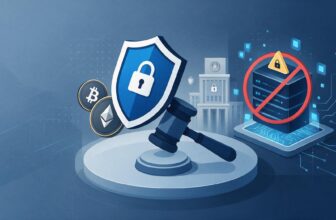
February 2026 marked the most significant Thai SEC enforcement action against crypto in years. The regulator filed criminal complaints with the Economic Crime Suppression Division targeting a licensed Thai digital asset broker, its affiliated overseas platform, and executives of both. The complaints allege the parties operated an unlicensed exchange jointly since 2023. For investors, the case has direct implications for choosing platforms.
What the SEC alleged
The arrangement under investigation involved a Thai SEC-licensed broker that nominally held the customer-facing license, while actual exchange functionality, order matching, and liquidity were provided by an overseas platform without a Thai license. Customers signed up through the local broker’s app and were automatically redirected to the global platform for actual trading. No separate identity verification was required.
The SEC argued this combined activity amounted to operating an unlicensed exchange in Thailand, even though one party held a license. Both faced criminal liability under the Emergency Decree on Digital Asset Businesses B.E. 2561.
Why this matters for individual investors
The case clarifies that the question “is this platform compliant in Thailand?” can’t be answered by checking only whether the front-end company has a license. Actual flow of customer funds, order execution, and asset custody all matter. If you’re using a Thai-branded service that redirects you to an overseas platform for actual trading, the underlying arrangement may not be compliant.
From a tax perspective: the 5-year capital gains exemption through 31 December 2029 applies only to gains realized through SEC-licensed Thai exchanges. If trades are technically happening on an unlicensed platform — even one accessed via a Thai-branded app — the gains may not qualify for the exemption.
How to check platform compliance
The Thai SEC publishes the list of licensed digital asset business operators. Check the platform’s name against that list. For platforms with Thai joint ventures (Gulf Binance is the clearest example), verify that the Thai entity is the one your account is held with, and that trades execute on the Thai entity’s infrastructure rather than the global parent.
Read the terms of service. Compliant platforms explicitly identify their Thai licensing. Platforms that obscure this in fine print are sending a signal.
What enforcement looks like going forward
The Ministry of Digital Economy and Society can order ISPs to block non-compliant platforms. Several have already been blocked through 2025-2026. The SEC has indicated continued targeting of joint-operation arrangements through 2026.
Practical guidance
If you’re using a smaller crypto platform that appears to operate from Thailand but isn’t on the SEC’s licensed list, consider migrating to a clearly compliant venue. Bitkub, Gulf Binance, Bitazza, Satang, Z.com EX, and ERX are the clearest examples with full Thai licensing. The cost of switching is mostly operational; the cost of staying on an unlicensed platform is potential regulatory action and loss of the tax-exemption benefit.