BrokerTH

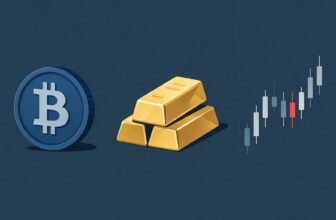
September 2026 has handed Thai investors three assets moving in radically different directions. Thai gold dropped 4.4% in the past week to ฿71,424 per baht-weight. Brent crude climbed 8.96% in a month to $92 per barrel, pulling Thai oil funds with it. Bitcoin sits at $78,155 with a September forecast of $80,137 — a modest 3.4% projected gain. Against a backdrop of a 57% Fed hike probability, Iran-US military escalation, and a SET index that closed at 1,588, the question every Thai retail investor is asking is simple: which of these actually protects my portfolio right now?
What Each Asset Has Actually Done Recently
- Gold: Thai gold at ฿71,424/baht-weight as of early September. Down roughly 4.4% over the past week — a sharp short-term pullback driven by a strengthening dollar and rising US real yields. Gold ETFs available to Thai investors include YGOLD, KTGOLD, and B-GOLD, all listed on SET.
- Oil funds: Brent at $92/barrel — up 8.96% month-on-month and 32% year-on-year. Thai oil funds BCAP-OIL, B-OIL (Aberdeen), and KT-OIL have all posted strong gains in line with the Brent surge. The Iran escalation adds a geopolitical risk premium that historically sustains elevated oil prices for weeks, not days.
- Bitcoin: $78,155 at time of writing, with September 2026 price models pointing to $80,137. Available through Bitkub and Gulf Binance (newly public, operating under Thai SEC license). Bitcoin’s 30-day performance has been choppy — positive but not spectacular.
When Gold Wins: The Historical Pattern
Gold’s classic use case is real uncertainty — not just volatility, but loss of confidence in fiat systems or prolonged geopolitical crises. The current Iran situation fits the geopolitical catalyst playbook, but there’s a counterweight: the dollar is strengthening on Fed hike expectations, and gold priced in USD tends to struggle when the dollar rallies. That explains the 4.4% weekly drop despite a war risk premium.
Gold wins in Thai baht terms when two things happen simultaneously: the dollar weakens (or holds flat) and there’s a genuine flight-to-safety bid. That combination looks more likely after a Fed decision than before it. If the FOMC holds rates on September 16, the dollar softens, and gold bounces. If the FOMC hikes, gold stays under pressure short-term before recovering as recession fears build. For SET-based exposure, KTGOLD and B-GOLD track gold prices with reasonable liquidity.
When Oil Wins: Geopolitics and Supply Shocks
Oil’s bull case right now is unusually clear. If Trump follows through on threatening Kharg Island — or if Iran closes any portion of the Strait of Hormuz — the supply shock sends Brent well above $100. Thai oil funds like BCAP-OIL and KT-OIL would follow directly. Unlike gold, oil has an active fundamental catalyst (supply disruption) rather than just a sentiment one.
The risk: if the Iran situation de-escalates quickly, oil gives back the geopolitical premium fast. Brent could drop $8-12 in a session. Oil funds are not a hold-forever hedge — they’re a situational trade on a specific geopolitical outcome. Right now, that outcome looks more likely than not to remain elevated through at least mid-September.
When Bitcoin Wins: Risk-On and Institutional Flow
Bitcoin is the odd one out in this comparison because it does not behave consistently as either a risk-off or a risk-on asset. In 2026, its correlation to US tech stocks has been moderate and inconsistent. The $80,137 September forecast implies a continued slow drift upward, not a breakout. Bitcoin wins when institutional money flows in and the macro environment turns risk-on — typically after a Fed pivot or a dovish surprise.
The 57% Fed hike probability is the biggest short-term risk to Bitcoin. A rate hike on September 16 typically triggers a 5-10% Bitcoin correction within 48 hours before any recovery. Thai investors accessing Bitcoin through Gulf Binance or Bitkub should be aware that the September 17 morning session (Bangkok time, right after the Fed decision at 3am) may see sharp moves in either direction.
The September 2026 Verdict: Which One Fits Your Situation
- If you want the clearest fundamental catalyst right now: Oil funds. The Kharg Island threat is real and measurable. BCAP-OIL or KT-OIL give you direct exposure without holding a commodity futures account.
- If you want downside protection with lower volatility: Gold ETF. KTGOLD or B-GOLD are liquid SET-listed products. The 4.4% weekly drop looks like a buying opportunity if you believe the Iran situation persists past the FOMC.
- If you have a higher risk tolerance and believe the Fed holds: Bitcoin via Gulf Binance or Bitkub. The risk/reward is asymmetric — a surprise Fed hold could send Bitcoin to $85,000+, but a hike brings it back to $72,000-74,000 territory.
One important note: the December 2026 deadline for ESG fund tax deductions (up to ฿300,000 at 30% of income) means that for longer-horizon Thai investors, Thai ESG equity funds may offer better risk-adjusted returns than any of the three assets above when tax benefits are factored in. Worth calculating before September ends.
How to Actually Hold Each One in Thailand
- Gold ETF: YGOLD, KTGOLD, B-GOLD — buy through any SET-connected brokerage account. Low barrier, THB-denominated.
- Oil fund: BCAP-OIL, B-OIL (Aberdeen), KT-OIL — available through Thai fund platforms. These are mutual funds, not ETFs, so pricing is end-of-day NAV.
- Bitcoin: Bitkub (larger user base, established THB pairs) or Gulf Binance (broader product range, deeper liquidity on major pairs). Both are Thai SEC licensed.
September is not a quiet month. Pick your position based on your actual risk tolerance, not the most exciting narrative.