BrokerTH
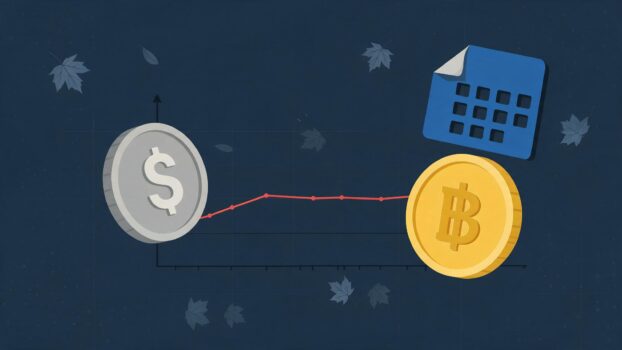
USD/THB traded at 32.76 on August 31, holding a tight 32.66–32.77 range as August closed. The baht is firmer than its July low, when the pair spiked to 33.84, and sits near the year’s 32.39 average. For Thai traders heading into September, the setup is a currency caught between a steady Bank of Thailand and a US Federal Reserve the market is still trying to read.
Where the pair sits
At 32.76 the baht has recovered from July’s weakness. The 2026 range has run 30.84 (January low) to 33.84 (July high), so mid-32s is squarely middle-of-the-road — neither stressed nor strong. That matters: a range-bound cross rewards patience over conviction bets.
What’s driving it
- BoT steady at 1.00%. The central bank held again in late August, keeping the rate gap with the US wide but predictable.
- Fed uncertainty. Markets spent August hunting for Fed clues; a late-month risk rally (crypto and equities) softened the dollar at the margin.
- Risk-on flows. The crypto surge and a US Treasury move to expand bond-buying nudged capital toward risk, easing pressure on emerging-market currencies including the baht.
What this means for Thai investors
If you import and pay in dollars, 32.76 is a workable level to cover near-term payables — the baht isn’t obviously about to strengthen sharply with the Fed still firm. If you export, the baht hasn’t run away weaker either, so there’s little urgency to chase forward cover. For anyone holding dollar assets as a baht hedge, the position is doing its job quietly; no need to add at these levels.
September watch list
- US inflation and jobs data — the Fed’s cue, and the dollar’s
- Any BoT commentary on growth or the baht
- Whether the late-August risk rally holds — sustained risk-on supports the baht
The takeaway
32.76 is a mid-range, low-drama level. Trade the range, not a breakout. Cover known dollar exposure where it makes sense, but don’t bet the book on a big baht move in either direction until US data forces the Fed’s hand.